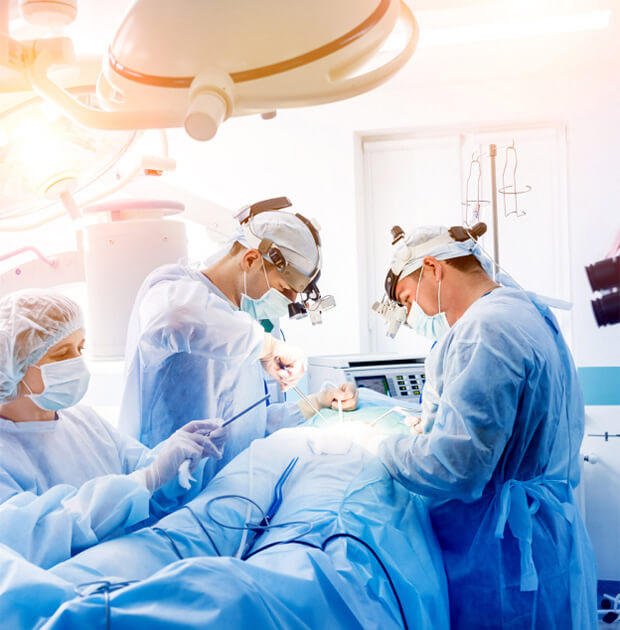



Our team of highly skilled cardiologists and surgeons brings together decades of experience and specialized training to provide you with the most advanced cardiac care.
We prioritize your well-being, crafting personalized treatment plans and ensuring a compassionate, supportive environment throughout your journey to recovery.
We are equipped with state-of-the-art technology and advanced facilities, enabling us to provide the most precise diagnostics and effective treatments available.
At KMCH Heart Institute, our Cardiology Department in Coimbatore provides comprehensive heart care services to ensure the best outcomes for patients. We specialize in 24/7 Primary PCI, expert coronary revascularization therapy, and holistic cardiac rehabilitation programs designed for complete recovery and long-term heart health.
Our facility is equipped with a state-of-the-art Cath Lab, a dedicated Coronary Care Unit (CCU), and a patient-focused Cardiology Day Care Center. We prioritize rapid emergency cardiac intervention, reducing door-to-needle and door-to-balloon time for critical heart conditions. KMCH Heart Institute is your trusted destination for advanced cardiac treatment, heart disease prevention, and comprehensive heart health management in Tamil Nadu.
Client Reviews
Common heart conditions cover a range of disorders that affect the heart’s structure and function. Here are some of the most prevalent ones
Coronary Artery Disease is the narrowing or blockage of the coronary arteries due to plaque buildup, leading to reduced blood flow to the heart muscle. CAD is a major risk factor for heart attacks and can develop silently over years. Early detection is crucial for preventing heart attacks and ensuring better long-term health.
Early Detection Methods:
Arrhythmias are disturbances in the heart’s electrical system, causing irregular, too fast, or too slow heartbeats. Untreated arrhythmias may lead to complications such as stroke or heart failure. Detecting arrhythmias early can prevent serious health issues.
Early Detection Methods:
Congenital heart defects are structural heart problems present at birth, affecting normal heart function. Early diagnosis is essential for timely intervention and optimal development. Many CHDs are now detected during pregnancy or soon after birth.
Early Detection Methods:
Cardiomyopathy refers to diseases of the heart muscle, often leading to weakened heart function and heart failure. It can be inherited or result from other conditions, and early detection reduces the risk of severe complications.
Early Detection Methods:
Heart valve diseases disrupt the normal flow of blood through the heart, causing fatigue, shortness of breath, or even heart failure if undetected. Early identification leads to better outcomes and treatment options.
Early Detection Methods:
The Cardiology Department provides a continuum of care for the prevention, treatment, recovery & rehabilitation of heart and vascular diseases.
These invasive procedures measure pressures and oxygen levels in the chambers of the heart. They help diagnose and assess various heart conditions, such as valve disorders and heart failure. These studies also assist in evaluating the effectiveness of therapeutic interventions.
Angiography involves injecting contrast dye into blood vessels to visualize coronary or peripheral arteries using X-ray imaging. It is essential for detecting blockages or narrowing that can lead to heart attacks or limb ischemia. The results guide revascularization procedures like angioplasty or bypass surgery.
Echocardiography uses ultrasound waves to create real-time images of the heart’s structure and function. It is vital for evaluating heart chambers, valves, and overall cardiac performance. This test is non-invasive and helps in diagnosing many cardiac pathologies.
The ETT monitors the heart’s electrical response while the patient exercises on a treadmill. It reveals how well the heart handles increased activity and is frequently used to detect coronary artery disease and assess exercise tolerance.
TEE is an advanced type of echocardiography performed by passing a probe down the esophagus. It provides detailed images of the heart’s structures, especially the atria and valves. TEE is especially useful when clearer images are needed compared to standard echo.
This test combines echocardiography with controlled physical or pharmacological stress. It highlights areas of the heart that may not receive enough blood flow during exertion. Stress echo is a non-invasive way to evaluate for ischemic heart disease.
The tilt table test assesses how a patient’s blood pressure and heart rate respond to changes in position. It is commonly used to diagnose causes of fainting (syncope), such as autonomic dysfunction or vasovagal syncope.
Myoview scans are nuclear medicine tests in which a radioactive agent highlights areas of the heart muscle. They determine regions with inadequate blood supply and help assess coronary artery disease severity.
This invasive test evaluates the heart’s electrical system by recording electrical activity from inside the heart. EP studies help diagnose abnormal heart rhythms (arrhythmias) and guide ablation or device placement.
The 500 slice coronary CT is an advanced, high-resolution CT scan to non-invasively visualize coronary arteries. It detects plaques, blockages, and anatomical variations, aiding in early diagnosis of coronary artery disease.
This procedure uses a needle or catheter to remove excess fluid from the pericardial sac surrounding the heart. It relieves symptoms and helps diagnose the cause of pericardial effusion, such as infection or malignancy.
ICE uses a miniature ultrasound probe introduced into the heart via catheter. It provides real-time high-resolution images during diagnostic or interventional procedures, enhancing safety and precision.
IVUS involves inserting an ultrasound probe into blood vessels to visualize interior walls from within. It assesses plaque burden and arterial wall structure, supporting precise placement of stents and evaluating vessels after intervention.
FFR involves threading a pressure wire across a coronary stenosis to measure pressure differences and determine the significance of arterial blockages. It helps guide the need for revascularization by identifying lesions causing reduced blood flow.
A minimally invasive procedure that opens blocked or narrowed coronary arteries using a balloon. The doctor inserts a catheter with a deflated balloon into the artery, inflates it at the blockage to widen the vessel, then removes the balloon. Often, a stent is placed to keep the artery open, improving blood flow to the heart.
Primary PCI (Percutaneous Coronary Intervention) involves quickly opening blocked coronary arteries during a heart attack. A stent—a small wire mesh tube—is inserted and expanded at the blockage site to keep the artery open, restoring blood supply effectively and reducing heart muscle damage.
Left Main/Bifurcation: These procedures treat blockages at branch points or the main left coronary artery, often involving multiple wires, balloons, and specialized stenting to ensure both branches stay open. Chronic Total Occlusion (CTO): Treats arteries blocked for over three months, using advanced imaging and guidewire techniques to restore blood flow Coronary Dissection: Repairs tears within the artery wall that can cause vessel closure; techniques include careful wire passage and stenting to restore true vessel lumen. AV Fistula: In rare cases, PCI may be navigated through an arteriovenous fistula, using special access methods to treat patients with unique vascular anatomy.
An IABP is a device inserted into the aorta to help the heart pump more effectively. The balloon inflates and deflates in sync with the heartbeat, increasing blood flow to the coronary arteries and reducing heart workload in critically ill patients.
This minimally invasive procedure closes an atrial septal defect—a hole between the heart's upper chambers. A device is delivered via catheter to the defect, where it expands to seal the opening and stops abnormal blood flow between heart chambers.
For closing a patent ductus arteriosus (an abnormal vessel between the aorta and pulmonary artery), a catheter is used to deliver a closure device or coil, blocking unnecessary blood flow and protecting heart and lung health.
A temporary pacemaker is inserted via catheter into a heart chamber to deliver electrical impulses, stabilizing heart rhythm in emergencies or during recovery from certain procedures.
Single Chamber: A permanent device with one lead, usually in the right ventricle, to regulate heart rhythm. Dual Chamber: Has two leads—in the right atrium and right ventricle—coordinating electrical signals for more physiologic pacing and heart function.
An implantable cardioverter-defibrillator (ICD) monitors heart rhythms and delivers shocks to correct dangerous arrhythmias. Combo devices may include pacemaker features for both pacing and defibrillation.
A balloon-tipped catheter is inserted to the narrowed heart valve and inflated, enlarging the valve opening and improving blood flow. This can delay or avoid the need for valve replacement, depending on which valve is treated.
Radiofrequency ablation destroys small areas of heart tissue causing abnormal rhythms using heat energy delivered via catheter, restoring normal heart rhythm. Septal ablation uses controlled injury to reduce excessive tissue in the heart’s septum, commonly in hypertrophic cardiomyopathy, improving blood flow.
A catheter-based procedure that ablates nerves in the arteries supplying the kidneys, lowering blood pressure in patients with resistant hypertension by disrupting nerve signals that raise blood pressure.